For me, the central idea was about music as a place you go to. Not a narrative, not a sequence that has some sort of teleological direction to it—verse, chorus, this, that, and the other. It’s really based on abstract expressionism: Instead of the picture being a structured perspective, where your eye is expected to go in certain directions, it’s a field, and you wander sonically over the field. And it’s a field that is deliberately devoid of personalities, because if there’s a personality there, that’s who you’ll follow. So there’s not somebody in that field leading you around; you find your own way.
~Eno, ‘Music for Airports’ (1978)
some topics produce a lot more words than others, and the idea of ‘music as a place’ is one such topic:
In addition to a full-time job and 3 kids, she also would teach piano lessons in the front room on an upright beast that weighed about half-a-ton. She played the piano for Sunday morning church, musicals, solo vocal performances and accompaniment in all sorts of situations, sometimes only by ear or reading on sight, so there was always much practicing of music going on in that green house where our incredible mom raised us.
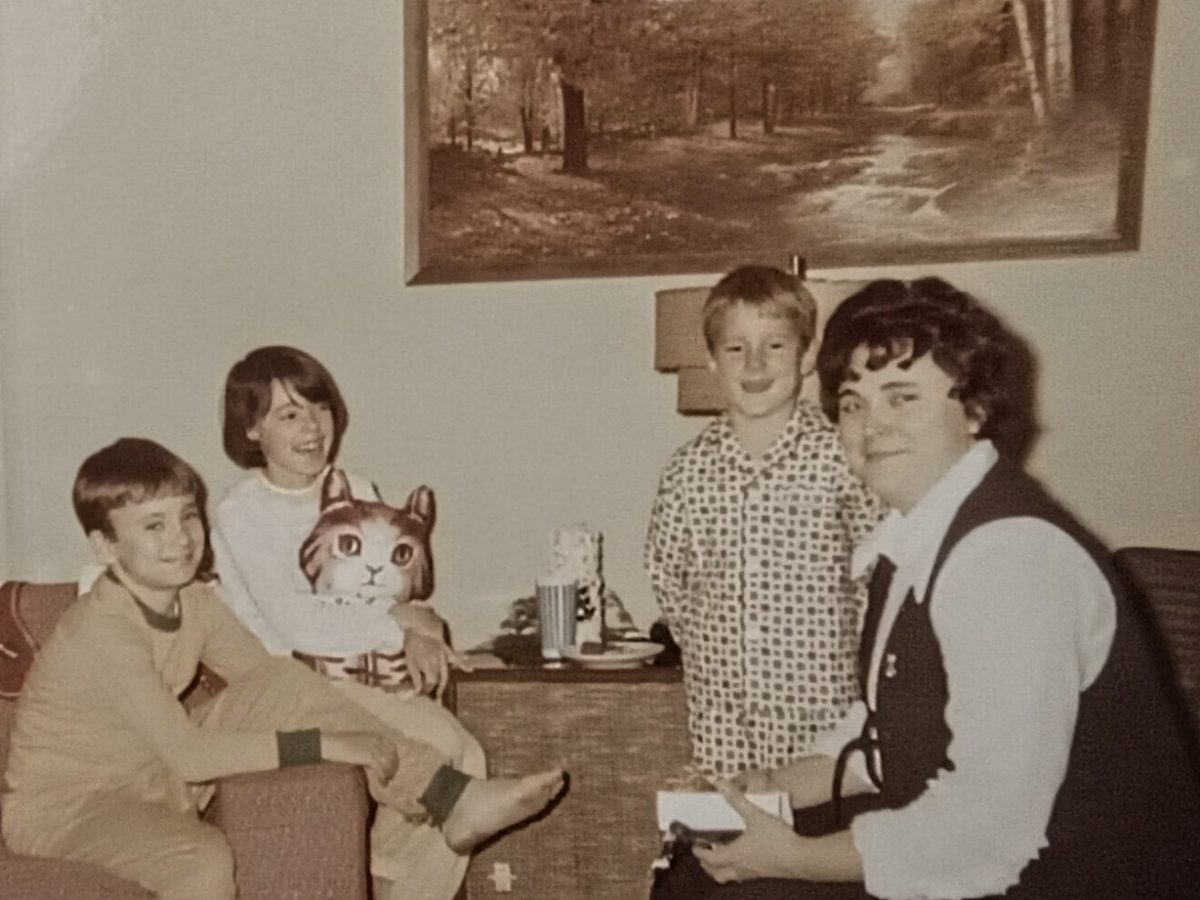
Some nights, we were just rowdy, wound up and acting badly, were sent to bed, and she would sit at her piano and start playing. There, the beginning of remembering songs and melodies, phrases and chord progressions appreciated solely for their musicality, magnified by a complete lack of technical understanding: for me, it was just notes strung together to make something that sounded good and, most importantly, in the case of rowdy kids lying in bed, something that calmed us down.
While I struggle infinitely to play melodies well on my own piano – a StudioLogic running software, on a Mac, of course, though I’d love to have an old Bösendorfer, Steinway, or maybe just one of those super-nice Yamaha’s, I’m not particularly picky – the sound of all of those notes from way back have, together, resonated well and have been carried with me very far, creating a place: the heart rate slows, breathing becomes deeper, a place that I can go to in my mind, instantly, with only the sound of a piano.
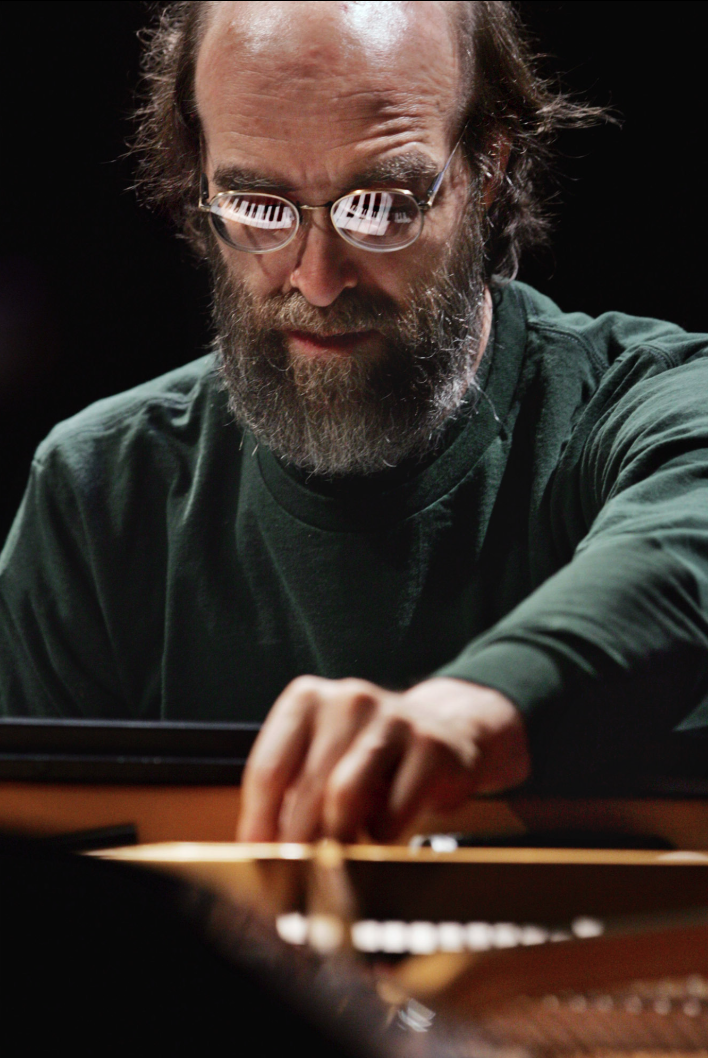
George Winston was the most astounding example of contemporary piano talent and, not surprisingly for anyone that enjoys his music, seeing him perform live 3 different times across his career only left me wanting more. From a concert hall designed for symphonic performances, then a terraced auditorium, to the chapel on a small, private all-girls school in Tennessee, set among old hardwoods then losing their leaves to the cold, gentle November rain as it would sometimes patter and tap on the roof while he played.
Each of his extraordinary performances was all George Winston, that Steinway that he toted around – heck, maybe the guy had several out in the truck – his bare feet, his genius of sometimes plucking and muting strings by reaching into the piano, that way he waited for each note to express and fade just so, coaxing, conjuring, tilting his shiny-bald head to focus his hearing in an almost Bill Evans style where it becomes difficult to separate the man from the piano, all of it utterly mesmerizing from there in the front-row stage-left seats that had somehow been obtained.
The place was so magical, she threw a low-impact elbow into my snoring carcass, sitting up straight and now back at the performance, holding my left side and wincing embarrassment, but give a good start-to-finish listen to December (1982) for one of the finest examples of his work.
And, sometimes it’s only about the performance.
Present in almost any format of music throughout the world, in America there would be no pop or ‘Top 40’ music of any kind without the piano, and an endless list of it’s performers once included a guy my mom took me to see as a kid of about 12 years old. With our weekly dose of The Waltons and a whole lot of time at church, about as bawdy as things got was watching The Three Stooges when mom wasn’t looking or until told to turn it off. The world seemed pretty harmless at that point.
Boy, things can be seen differently in a flash, new worlds revealed, something far more than my mom would have knowingly signed us up for: before Olivia Newton John came out to sing for everybody, Paul Williams sat at a beat up, impeccably tuned and mic’d concert grand, long coat tails draping down his back and dangling just above the floor, what looked like a big old fat vintage ribbon microphone was stuffed in his face so you could hear the guy breathing sometimes, telling stories while playing softly, then he would belt out these pop numbers one after the other, stuff he himself had composed that ended up being recorded by others and made into gold.
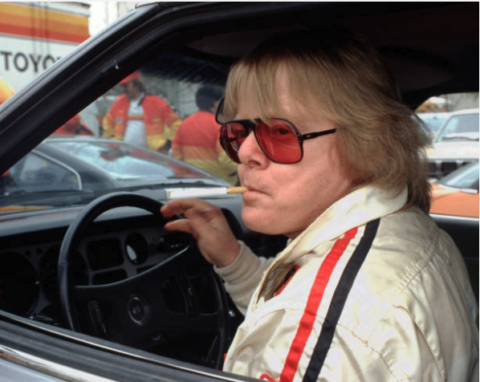
Rainy Days and Mondays brought out his salt as a performer and actor, right there in the middle of the song – 🎵 rainy days and mondays alwaaaaaaays 🎶…… – guy stands up, slowly and loudly scooching the piano bench beneath him back, quickly marches stage-center-front, as only Paul Williams could, and launches into this extended, sparkling, and colorful litany of cursing and swearing about how he always gets interrupted by some jackass at that point in the song – then he goes back to his bench, scooches it back, picks up precisely where he left off, and completes the song to roaring approval. Not exactly how the Carpenter’s sang it. My mom was mortified. Having never once heard a guy cuss like that, however, especially in front of about 20,000 people, I couldn’t stop laughing.
Ironically enough, later in his film career that guy created a character named Little Enos, and there, that evening, he certainly created a memorable place as well.
As the weird kid that sometimes listened to the local public radio station for the sounds of piano, the selections predictably included classical music – at least the stuff I could try to listen to – but by then band class, chorus, and marching band were already part of my world. Of course there are the giants of piano in this genre, particularly given their prolific careers moving beyond into orchestral composing and performance, but time and again it was names such as Satie, Chopin, Debussy, Ravel, and Cage, for me, artists that created using the entire scope of possibility of the piano, much as George Winston: an approach that produces a place.
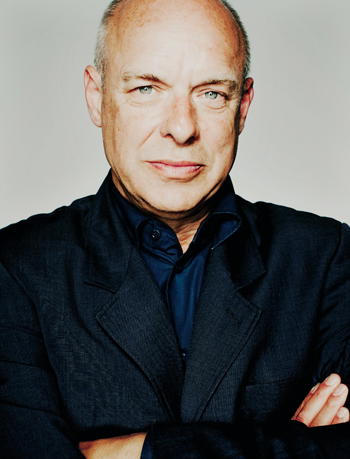
From those same names moving forward, Brian Eno and others experimented with creating spaces from expansive to intimate, evoking an array of atmospheres, textures, energy, and mood using traditional and electronic instruments, human voice, and an endless collection of natural and ‘found’ sounds from both common and unusual sources, along with some analog and digital engineering skills and a willingness to simply muck about in the studio. From his first work, Discreet Music (1975) – thanks to Satie, some harp music and the rain outside – followed by Music for Airports (1978), the best example here for me is still Thursday Afternoon (1985), a favorite, still often played in the background, no rules, void of any person, any thematic concepts or idea to follow along, just this simple, floating place for tossing the thinking overboard for as long as it takes, use looping, set the volume just right.
Now, while Eno is largely an artists’ artist with a very British approach which yields all manner of formats, music being just one of them – having produced such acts as U2, Talking Heads, David Bowie all after first founding Roxy Music – his own studio efforts in the 1970’s were the beginnings of what is now a “…versatile catalogue of environmental music suited to a wide variety of moods and atmospheres.”, to use his words exactly. More commonly the style is often called ambient, a large bucket of stuff though a really dull, non-descriptive term about place. If there were an oversimplified summary, a language that fits for me, it would discuss the importance of the spaces between the notes and musical phrases, which are at least as important as the musical sounds being rendered, and how it all fits perfectly with the real, actual physical places on the map where I’ve wandered, a soundtrack for spaces of all shapes, sizes, and origins.
Optimally designed for large format screens and powerful sound systems combining together in order to present an experience, film soundtrack can be intentionally compelling as accompaniment or fade gently into the background. Sometimes it is, however, capable of standing on its own after perhaps having viewed the film, now evoking the very same mental imagery of place within a context simply by listening only. In this regard, the ‘also’ status of this genre very much becomes a key set of examples of what is in this murky ambient bucket.
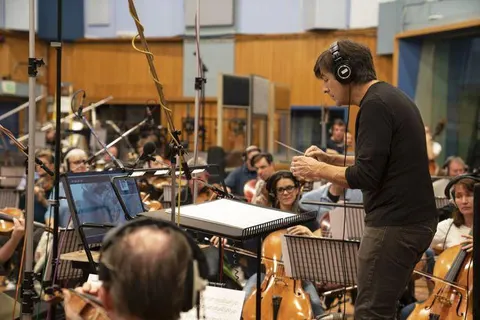
Favorite examples include the prolific genius work of Thomas Newman – of the famous Newman Hollywood music-powerhouse clan – including his American Beauty (1999) and Road to Perdition (2002), Mark Isham with haunting visions of a mostly-mythical far north in Disney’s Never Cry Wolf (1983), along with Mrs. Soffel (1984), or the Moog-mom herself, Wendy Carlos composing for the dystopic A Clockwork Orange (1971), or The Shining (1980) and Tron (1982), each of these artists and others incorporating the core ideas of music as a place within their respective compositions. Determining broad influences and origins of these artists becomes almost impossible, however. As if they somehow reached into a nameless void, plucked out this sound, polished it, expanded on it. But, where?
For me, there are two important artists that can provide clues, each pursuing their own ideas about place using evolving sounds, tools, and instruments, one working almost exclusively digital and the other leveraging analog to an unheard of level of production and performative art.
Steve Roach is, to say the least, exceptional as a creator and his productions stretch from this day back to the late-1970’s. It would be impossible to imagine a world of ambient, electronic, space or place music of any kind without his work, starting just around the same time electronic instruments were consistently showing up in studio productions, including pop music. All of it based on a combination of oscillator, filter, and amplifier – the minimal synthesizer – combined in utterly endless permutations, yet every shred of it based on these simple elements, much of the similar work and influence had come from Klaus Schulze and Tangerine Dream but was markedly less atmospheric. The landmark 3-hour Quiet Music (1986) along with Structures from Silence (1984) are compelling works and are still – much like Thursday Afternoon from Eno – very much a foundation for approaching this music in a meaningful way.
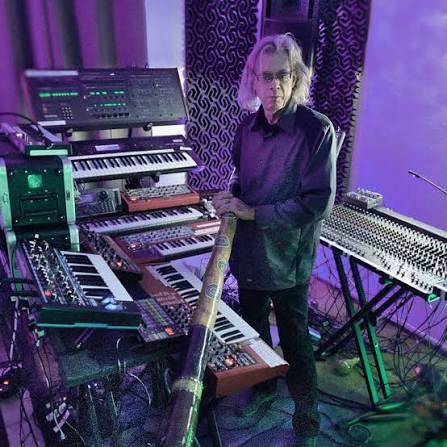
Pinpointing the birth of a genre is always open to interpretation, but sometimes it can happen in an unexpected place, where it’s late one night at the MCA studios in Nashville, and the great producer, session artist and Country Music Hall Of Famer Tony Brown is wandering the halls when he stops in his tracks and listens, overhearing music coming from behind a closed door where a guy, left to his own, plays a synthesizer, building beautiful worlds of sounds, spaces entirely unique and of his own mind, later gifting them to us when Brown convinces the young man to put an album together.
Giles Reaves, a studio engineer and musician new to the country music business in the early 1980’s, a guy that fused a strange little computer called a Mac, assembled and sold by an odd, quirky little startup named Apple, together with his own musical skills and production processes, unmistakably a pioneer in so doing, particularly given the relatively immense computing horsepower and range of digital audio workstation software now available: the album Wunjo was produced using a digital 2-track setup, an Oberheim, other stuff like sampled sound and vocals, along with some f/x, all of it coming from a Mac, in 1986.
If there were ambient sounds that came out of nowhere, this kid knew how to make them. Tucked into the vinyl collection, amid all of the Monk, Coltrane, Montgomery, Burrell, and Clark, two well-played and worn albums: with both The Widow Sky from Nothing Is Lost (1988) and The Unknowable from Wunjo (1986) being the earliest reference standards for building a space within the limits of the album format – long before concepts like ‘Internet’ and ‘streaming’ were even around, though CD’s were new – but just another term for place, best I can tell, and one requiring an acknowledgment, as a universe – if you will – of space music was just beginning to evolve around this same time.
Music From The Hearts of Space originated as a 3-hour broadcast on KPFA in Berkeley, ultimately syndicating on hundreds of public radio stations as a weekly one-hour broadcast that continues to this day. Coming across the local airwaves on Sunday evenings, it was originally the metered pace of the voices of Anna Turner and Stephen Hill speaking about the music which drew my attention, with each opening and at the end of each show they would review the playlist, its artists, and a few details about the production. The collection of cassette tapes in my own stash was maybe a dozen shows or so, constantly recycled over with a new one, prized and played until the tape would break or the capstan would stick and wad up the whole thing inside the deck. Fortunately, the collection is 100% digital these days, with HOS sort of acting in this curator capacity, doling out a weekly dose on just about every public radio station, and if there is one single recommendation for exploring an endless well of place, space, or what Stephen Hill refers to as contemplative, stuff imagined and recorded today and also dating back to the very beginning, hands-down HOS is it.
For this listener there is much, along with these examples, in the genre of which Brian Eno and others did the pioneering work and for which he himself coined the term, a word which has stuck for the most part. Adding those artists to this written narrative of an accounting that gives them all their unique, essential part of the ongoing ambient music story would be an endless undertaking. By all means, listen to Hammock, Erik Wøllo, Kevin Braheny, Loneward, and don’t miss Thierry David, Buckethead, Jeff Pearce, or Daniel Lanois, Robert Fripp, and Ian Boddy, Marconi Union, Martin Sturtzer, Michael Stearns, and you just have to listen to Liz Story and William Ackerman, old-school originals at the Windham Hill label where George Winston once started a little thing of his own, too. These and hundreds of others that so beautifully defy descriptions with words or traditional categories. But less amorphous is Eno’s own explanations about where the idea comes from, circling back to its’ formative roots, he wraps up with this:
Over the past three years, I have become interested in the use of music as ambience, and have come to believe that it is possible to produce material that can be used thus without being in any way compromised. To create a distinction between my own experiments in this area and the products of the various purveyors of canned music, I have begun using the term Ambient Music.
An ambience is defined as an atmosphere, or a surrounding influence: a tint. My intention is to produce original pieces ostensibly (but not exclusively) for particular times and situations with a view to building up a small but versatile catalogue of environmental music suited to a wide variety of moods and atmospheres.
Whereas the extant canned music companies proceed from the basis of regularizing environments by blanketing their acoustic and atmospheric idiosyncracies, Ambient Music is intended to enhance these. Whereas conventional background music is produced by stripping away all sense of doubt and uncertainty (and thus all genuine interest) from the music, Ambient Music retains these qualities. And whereas their intention is to `brighten’ the environment by adding stimulus to it (thus supposedly alleviating the tedium of routine tasks and levelling out the natural ups and downs of the body rhythms) Ambient Music is intended to induce calm and a space to think.
Ambient Music must be able to accomodate many levels of listening attention without enforcing one in particular; it must be as ignorable as it is interesting.
~Sir Brian Peter George Eno (1978)