In the years I have traveled through America, in cars and on horseback, on foot and by raft, I have repeatedly been brought to a sudden state of awe by some gracile or savage movement of animal, some odd wrapping of a tree’s foliage by the wind, an unimpeded run of dew-laden prairie stretching to a horizon flat as a coin where a pin-dot sun pales the dawn sky pink. I know these things are beyond intellection, that they are the vivid edges of a world that includes but also transcends the human world. In memory, when I dwell on these things, I know that in a truly national literature there should be odes to the Triassic reds of the Colorado Plateau, to the sharp and ghostly light of the Florida Keys, to the aeolian soils of southern Minnesota and the Palouse in Washington, though the modern mind abjures the literary potential of such subjects. (If the sand and floodwater farmers of Arizona and New Mexico were to take the black loams of Louisiana in their hands they would be flabbergasted, and that is the beginning of literature.) I know there should be eloquent evocations of the cobbled beaches of Maine, the plutonic walls of the Sierra Nevada, the orange canyons of the Kaibab Plateau. I have no doubt, in fact, that there are. They are as numerous and diverse as the eyes and fingers that ponder the country – it is that only a handful of them are known. The great majority of them are to be found in drawers and boxes, in the letters and private journals of millions of workaday people who have regarded their encounters with the land as an engagement bordering on the spiritual, as being fundamentally linked to their state of health.
~Barry Lopez, from his essay ‘The American Geographies’
Ponder the Country
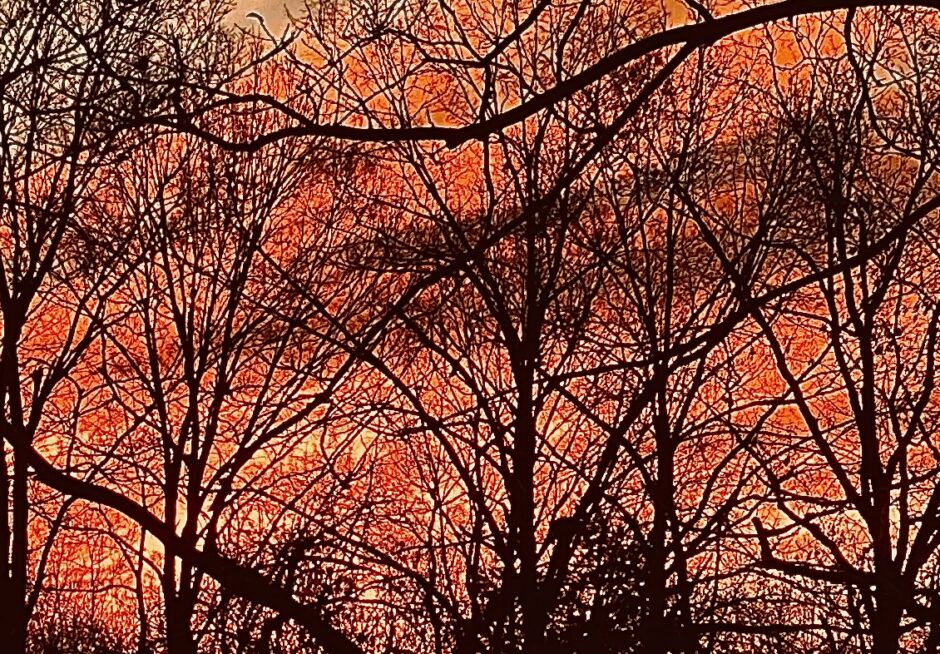
wood be moirè - from January 2026 - but orange you glad it’s almost spring